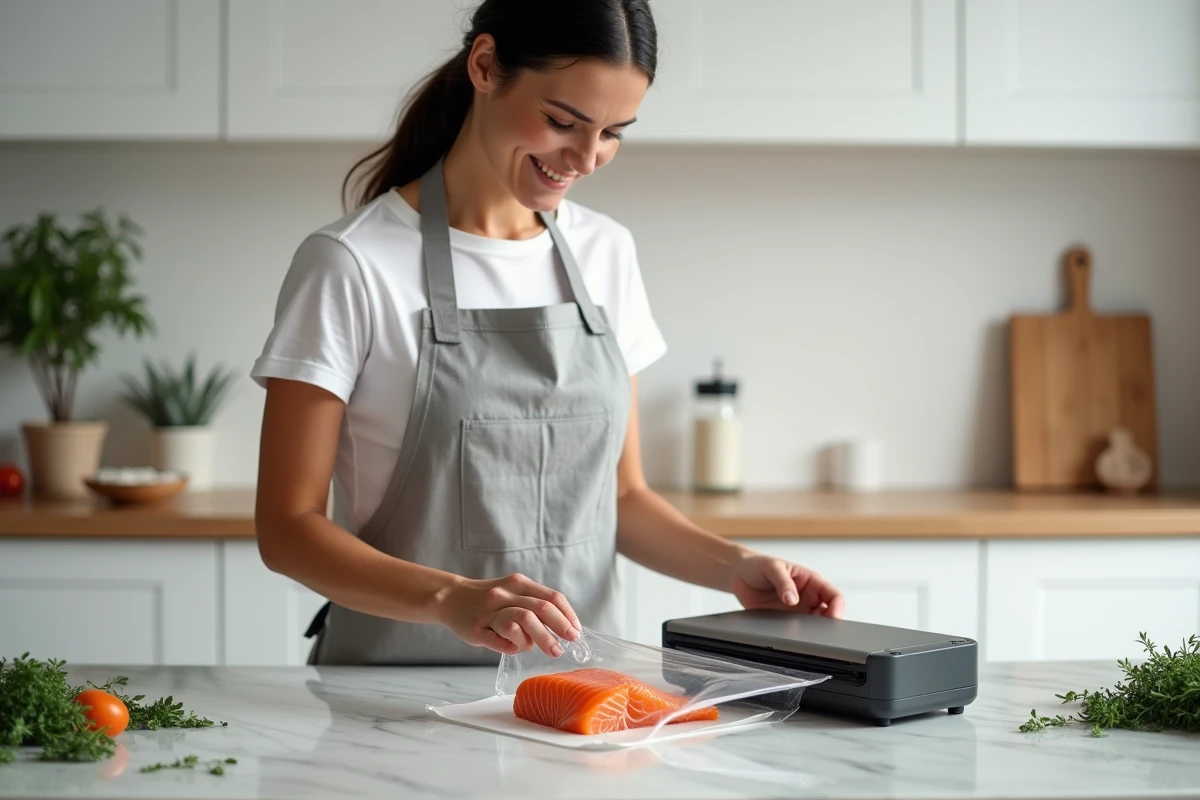
The choice of a vacuum sealer depends on technical parameters that most guides overlook. Pump type, sealing bar width, compatibility with low-temperature cooking: we detail here the criteria that make the difference between a useful purchase and a device relegated to the cupboard after three months.
Sealing and pump: the two components that determine the reliability of a vacuum machine
The sealing bar is the structural weak point of entry-level machines. A single seal of less than 3 mm is sufficient for thin bags intended for the refrigerator, but it regularly fails under thermal stress during prolonged sous vide cooking. Devices equipped with a double seal or a wide seal offer significantly more reliable airtightness, especially with preparations containing liquids or marinades.
On the pump side, two technologies coexist. The membrane pump, common in domestic models, generates a suction level sufficient for conventional preservation. The oil pump, reserved for semi-professional or chamber machines, achieves a deeper vacuum and handles high throughput without overheating. We recommend the oil pump only if you regularly deal with large volumes or wet products.
A rarely documented point: the availability of spare parts (gaskets, sealing elements, rolls) is starting to weigh in recent comparisons. Since 2024, several comparison sites have included this reparability criterion. Before purchasing, check that the manufacturer markets these consumables over time.
To compare these specifications across multiple models, a comparison of the best vacuum machines remains the most direct way to identify differences in sealing quality and suction power between references.
External suction vacuum machine or chamber machine: which device for which use
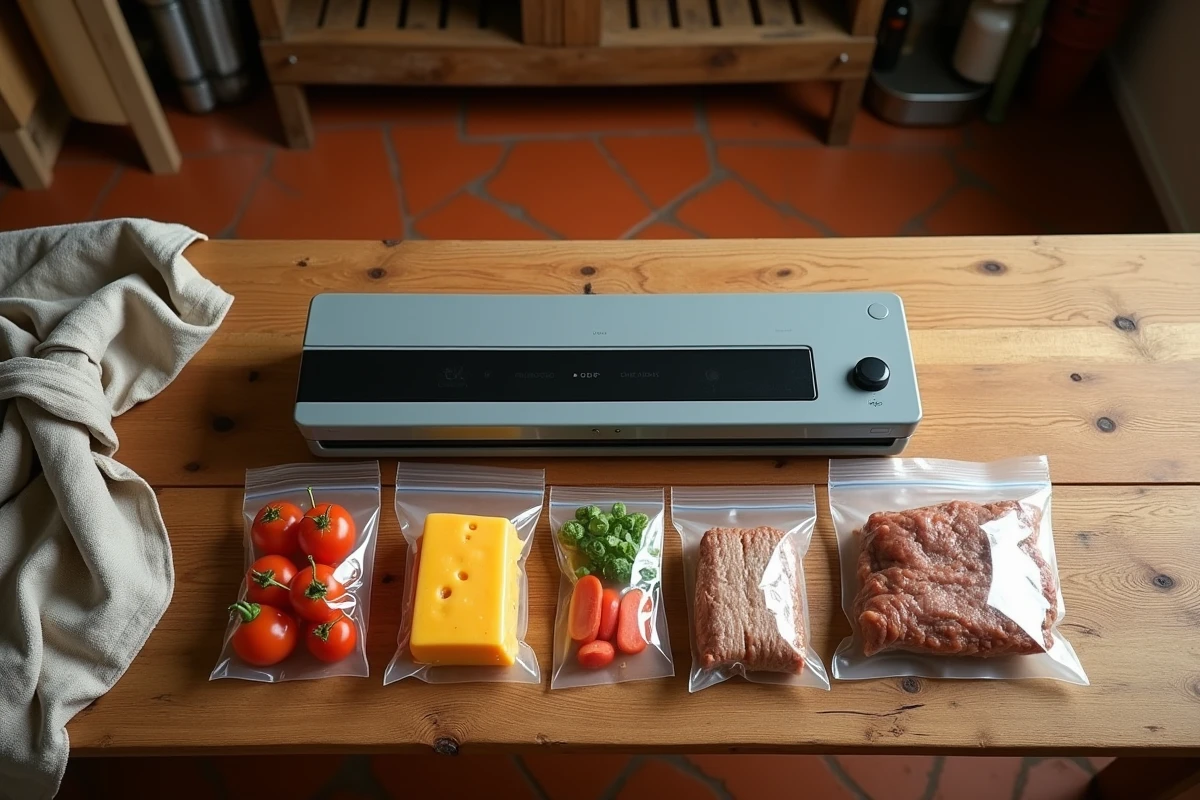
The distinction between external suction and chamber machines is not about comfort, but a fundamental physical difference. A chamber machine creates a vacuum around the entire bag, preventing liquids from being drawn towards the pump. An external suction machine draws air from the opening of the bag, inevitably causing the juices to flow back towards the sealing bar.
In practice, if you practice sous vide cooking with marinades, sauces, or juicy meats, the chamber machine solves a problem that external suction can only circumvent (bag tilting, pre-freezing of the liquid). The additional cost is justified by versatility and a reduction in the rate of poorly sealed bags.
For use focused on dry preservation (vegetables, cheeses, sliced charcuterie, portioning raw meats), an external suction machine with adjustable suction power largely meets the need. The suction adjustment is a criterion not to be overlooked: without it, delicate foods like ripe fruits or chips are crushed.
Low-temperature cooking compatibility and choice of vacuum bags
The combination of vacuum sealer and immersion circulator has become a common practice among individuals. We observe that many first buy the machine for cooking, then discover long-term preservation as a secondary benefit. This scenario imposes constraints on the bags and the sealing.
- Bags must be certified for high-temperature food contact (generally above 80 °C for several hours). Budget waffle bags do not always guarantee this thermal resistance.
- The seal must withstand prolonged immersion without peeling off. A double seal or a sealing width greater than average significantly reduces the risk of leakage during cooking.
- Smooth bags only work with chamber machines, while waffle bags are essential for external suction models. Buying the wrong type of bag is the most common mistake among beginners.
The cost of consumables weighs on the long-term budget. A roll of quality food-grade waffle bags costs significantly more than a generic roll, but the difference pays off in fewer failed seals and lost food with low-quality bags.
Compact cordless devices: vacuum sealing for small spaces
Since 2023, compact systems with cordless pumps have multiplied. These kits work with specific reusable boxes, bottles, and bags. Their main advantage is minimal bulk: no sealing bar, no monopolized countertop.
Their limit is equally clear. The level of vacuum achieved remains lower than that of a bar machine, which reduces preservation duration and excludes sous vide cooking. These devices are suitable for occasional short-term preservation in the refrigerator, for leftovers or pre-prepared portions.
We consider them a complement, not a replacement. If your main goal is long-term preservation or low-temperature cooking, a bar sealing device (even compact) remains the relevant choice.
Decisive selection criteria for a durable vacuum sealer
Beyond the type of machine, a few technical parameters deserve systematic checking before purchase:
- The maximum sealing width accepted determines the size of the portions you can package. Compact models often limit to 28 or 30 cm, insufficient for large pieces.
- The adjustable suction power (gentle mode for delicate foods, maximum mode for dry products) prevents crushing and improves versatility.
- The presence of a liquid recovery compartment protects the pump in case of accidental backflow on external suction models.
- The quality of the closure seal of the lid (on chamber machines) or the suction gutter (on external models) determines the longevity of the device.
A well-chosen vacuum sealer is not judged by its purchase price, but by its ability to produce reliable seals over time, with available consumables and a suction level suited to your actual uses. Prioritize sealing quality and bag compatibility over any aesthetic or promotional considerations.