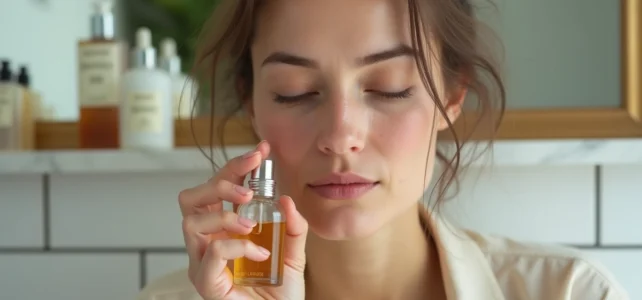
The concentration of denatured alcohol remains the primary factor for skin irritation in a conventional perfume. For sensitive skin, the choice of fragrance is not limited to the olfactory family or the trail: it requires a careful reading of the formulation, the galenic vehicle, and the method of application.
Galenic formulation and vehicle: what irritates even before the top note
Ethanol, the base of almost all eaux de parfum and eaux de toilette, causes rapid evaporation that dehydrates the stratum corneum. On skin where the barrier is already compromised, this evaporation is enough to trigger redness, tightness, or contact dermatitis.
We observe that switching to an oily or aqueous vehicle radically changes tolerance. Oil-based perfumes (jojoba, squalane, fractionated coconut) deposit the fragrant molecules on a lipid film that slows diffusion and eliminates the initial alcoholic shock. The trail is more discreet, and the longevity is often comparable.
The so-called skinification of perfume trend is pushing some brands to formulate on bases similar to a serum: glycerin, aloe vera, neutral oils. The result resembles a scented treatment rather than a classic perfume. Those looking for a fragrance for sensitive skin on Miss Marion will find a complete breakdown of this hybrid approach between care and fragrance.
The label “alcohol-free” on a bottle does not guarantee the complete absence of irritants. Some substitute solvents (dipropylene glycol, benzyl alcohol naturally present in essential oils) can also cause sensitization. Reading the INCI list remains the only reliable reflex.
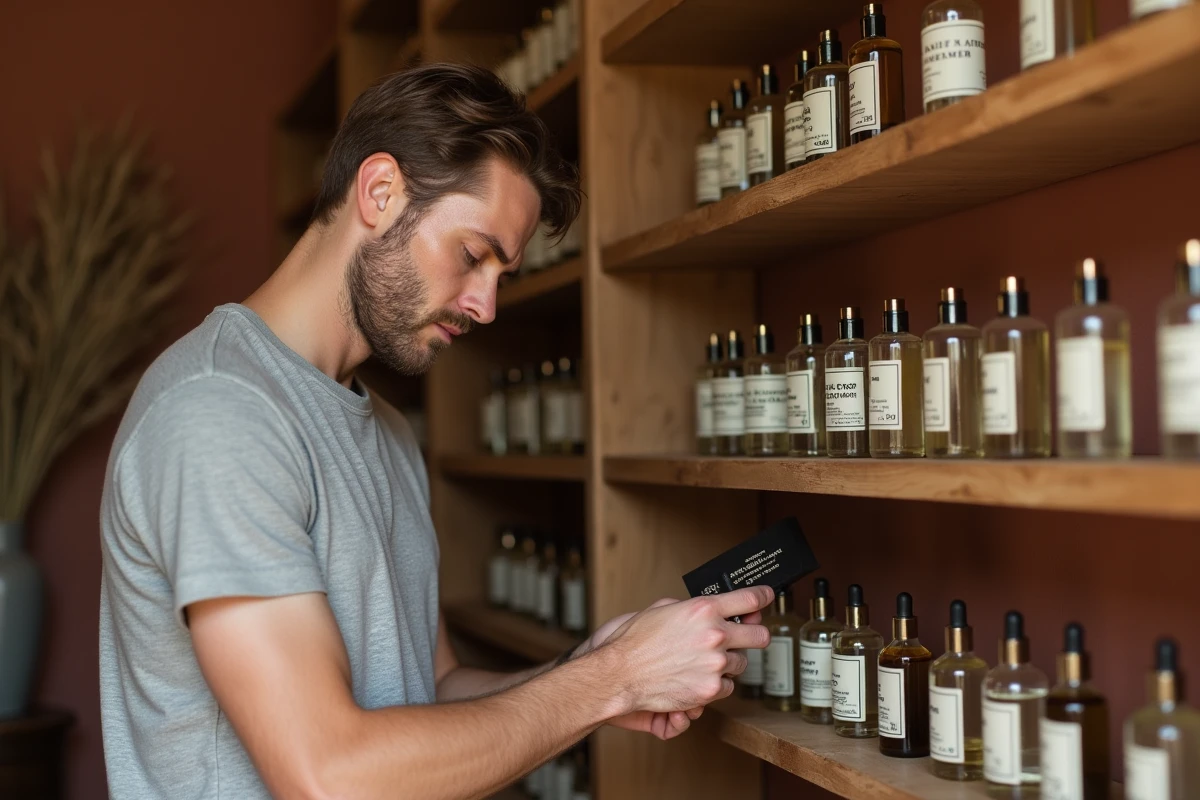
Regulated allergens and perfume for reactive skin: reading beyond marketing
European regulations require the declaration of twenty-six fragrance allergens on packaging as soon as they exceed a certain concentration threshold. Among those most frequently implicated in sensitive skin: linalool, limonene, geraniol, citronellol, cinnamal.
A “natural” perfume is not synonymous with a hypoallergenic perfume. Essential oils of lavender, rose, or citrus concentrate precisely these molecules. A purified synthetic extract can, in some cases, present a lower allergenic profile than a natural absolute rich in secondary components.
We recommend targeting short compositions (fewer than thirty ingredients) and avoiding formulas that stack several essential oils with high sensitizing potential. Brands that publish their complete INCI list online facilitate this sorting before purchase.
Guidelines for filtering a formula
- Check the presence and rank of the twenty-six declared allergens: the higher they appear on the list, the higher their concentration
- Prefer bases without ethyl alcohol or with an alcohol content lower than that of a classic eau de parfum
- Look for the mention “dermatologically tested on sensitive skin,” which implies a patch test protocol under medical supervision
- Favor roll-on or dropper bottles, which limit the amount applied and thus the allergenic load per application
Application areas and textile alternatives for a trail without irritation
Applying perfume directly on the neck or the inside of the wrists exposes the thinnest and most vascularized areas of the epidermis. On reactive skin, shifting the perfume to clothing or hair significantly reduces the risk of irritation while maintaining a perceptible trail.
Fabric retains base molecules (woods, musks, ambers) longer than skin. Spraying on the inside of a collar, a silk scarf, or a shirt cuff releases the fragrance gradually, without direct skin contact.
For those who prefer skin contact, the trick is to first apply a neutral, unscented balm (shea butter, ceramides) and then spray the perfume on top. This protective film acts as a buffer between the alcohol or solvent and the epidermis.
Textile mists and ambient perfumes as olfactory relays
Patients undergoing heavy dermatological treatment or chemotherapy illustrate an extreme case of skin sensitivity. In this context, professionals direct towards textile mists, scented candles, or highly diluted essential oils for atmospheric diffusion. The olfactory pleasure is maintained without any application on the skin.
This approach also applies to everyday sensitive skin during inflammatory flare-ups (eczema, rosacea): temporarily suspending perfume on the skin and switching to a textile or ambient support avoids worsening the crisis.
Testing protocol before adopting a new perfume
Testing a perfume on the inside of the elbow for forty-eight hours remains the most reliable gesture to detect a delayed reaction. Allergic contact dermatitis does not always manifest in the minutes following application: it can appear the next day.
We advise against testing multiple fragrances simultaneously. One at a time per forty-eight-hour cycle allows for isolating the responsible agent in case of a reaction. The inside of the elbow replicates the conditions of a thin, warm area, close to the neck or wrist.
If no redness, itching, or burning sensation appears, the perfume can be worn on a limited area for a week before expanding its use. This gradual increase protects skin that fluctuates in tolerance according to the seasons or stress levels.
Olfactory pleasure is not incompatible with reactive skin, provided that perfume is treated as a full-fledged cosmetic product. Choosing the right vehicle, reading the ingredient list, adapting the application area, and following a testing protocol: these four levers are enough to find a pleasant trail without compromising skin comfort.