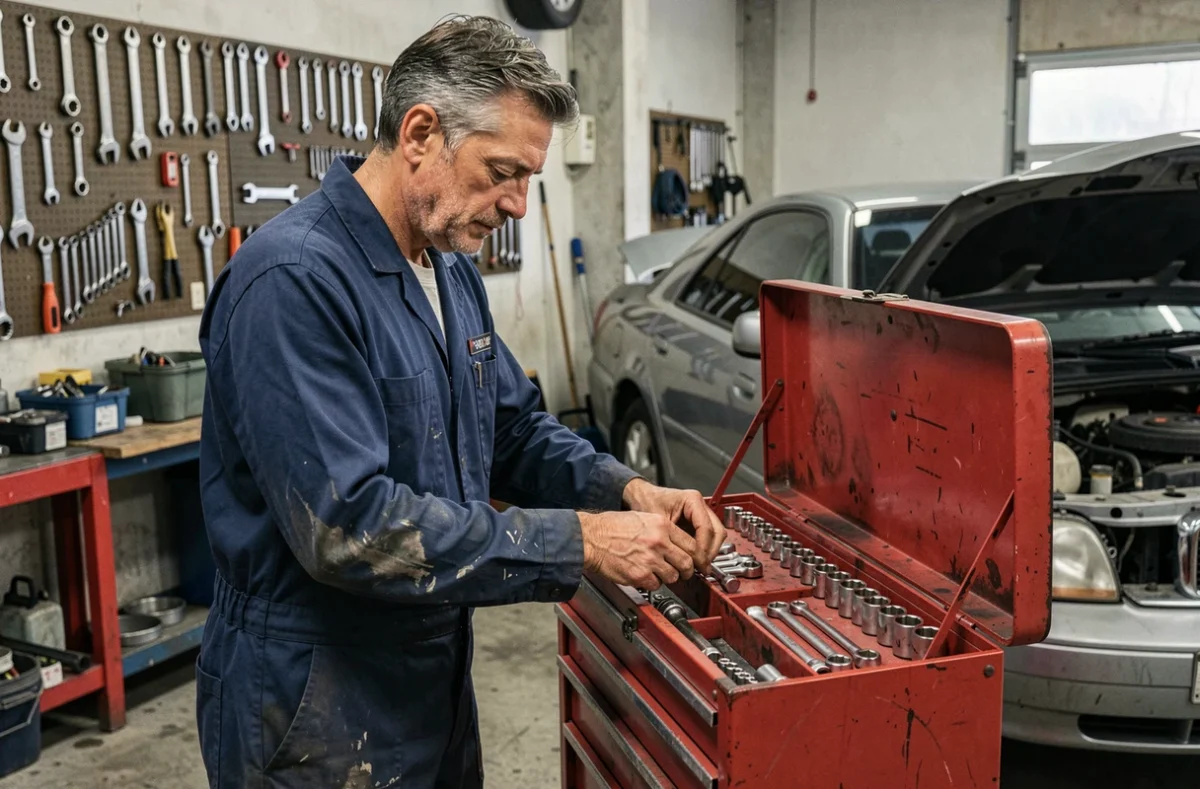
Between a diagnostic scanner that cannot read all control units and an entry-level torque wrench whose accuracy drifts after a few months, choosing automotive equipment involves far more than the price tag.
Vehicle compatibility, the reliability of technical specifications, and the actual scope of work determine whether a tool will prove useful or end up at the back of the garage. This article examines the practical differences between equipment categories to identify which ones really affect the quality of maintenance or repairs.
Comparison table of automotive equipment by use and limitations
Before buying, it is useful to map out tool categories according to the type of work, the skill level required, and regulatory limits. The table below summarizes these factors for the most common categories.
| Equipment category | Work covered | Key technical criterion | Limitations for private users |
|---|---|---|---|
| Fastening tools (torque wrench, sockets, combination wrenches) | Oil changes, wheels, brakes, spark plugs | Torque range and accuracy of the torque wrench | No regulatory restrictions |
| Lifting equipment (hydraulic jack, jack stands) | Access to the underbody and running gear | Load capacity and lifting height | Follow the manufacturer’s lifting points |
| Multibrand diagnostic scanner | Reading/clearing fault codes, live data, resets | Compatibility by make/model/year and available functions | Some coding functions remain locked by the manufacturer |
| Multimeter and electrical tools | Testing 12 V batteries, sensors, low-voltage circuits | Measurement category (CAT III minimum for automotive use) | All high-voltage work (hybrid, electric) is off-limits without the required certification |
| Pressure washer | Bodywork, wheels, engine bay | Pressure (bar) and flow rate (liters/hour) | No restrictions, but excessive pressure can damage seals and paint |
This table highlights a point that is often overlooked: limitations matter just as much as tool performance. A diagnostic scanner that looks impressive on paper may prove useless if it does not support the vehicle’s specific control units.
Compatibility and diagnostics: costly differences
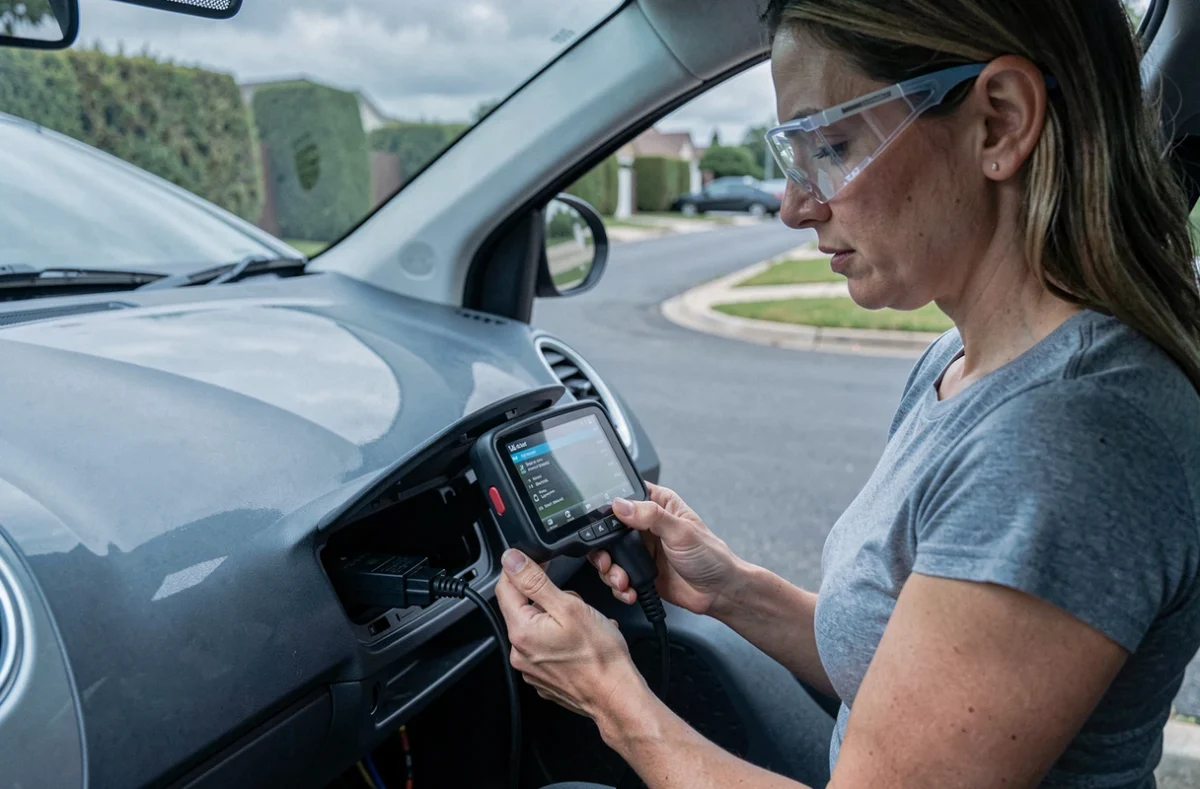
Diagnostic scanners carry the greatest risk of being the wrong purchase. A multibrand device often lists a wide range of compatible vehicles, but not all functions are available on every model. Reading fault codes, viewing real-time data, resetting service intervals, coding injectors: each level of functionality depends on the manufacturer’s protocol and the tool’s software license.
In its judgments of October 5, 2023 (Cases C-296/22 and C-319/22), the Court of Justice of the European Union clarified that access to diagnostic and repair information cannot be made conditional on certain registration requirements imposed by a manufacturer.
This decision strengthens the right of independent repair shops and private users to use third-party tools. In practice, equipment reference catalogs on systeme-auto.com make it possible to cross-check equipment references against the specifications of a particular vehicle, reducing the risk of incompatibility.
Before making a purchase, three checks are essential:
- Confirm that the tool supports the vehicle’s exact make, model, and year—not just the make in general
- Identify which functions are actually unlocked (read-only, clearing, coding) for that specific model
- Check the software update policy: some manufacturers charge an annual subscription that can account for a significant share of the initial purchase price
Electric and hybrid vehicles: where DIY work stops
Maintaining an electric or plug-in hybrid vehicle involves more than replacing brake pads or topping up windshield washer fluid. High-voltage circuits (up to several hundred volts) require specific electrical certification, as set out in French regulations. A standard multimeter and DIY gloves do not provide adequate protection.
The distinction is clear. Routine maintenance (brakes, suspension, lighting, wipers, tires) can still be carried out with standard tools. Any work involving the traction battery, inverter, electric motor, or orange cables must be handled by a qualified professional. Confusing these two areas of work can expose you to a serious risk of electrocution.
For home charging station installation, regulations require the use of an IRVE-certified electrician for installations above 3.7 kW. This threshold covers the most basic charging stations. Most home wallboxes exceed this power rating, making DIY installation non-compliant in most cases.
Fastening tools: measurable precision versus guesswork
The torque wrench clearly illustrates the difference between calibrated equipment and an imprecise tool. Tightening a wheel by feel or with a standard cross wrench does not guarantee the torque specified by the manufacturer. Insufficient tightening can cause a wheel to loosen while driving. Excessive tightening can warp the brake disc or damage the studs.
A click-type torque wrench is the most reliable option for private users. Dial or electronic models provide more precise readings, but cost considerably more. The key factor to watch is the torque range: a wrench designed for high torque (wheels, cylinder heads) is not suitable for low-torque applications (spark plugs, oil pans), and vice versa.
Socket and combination wrench sets round out this equipment. Choosing chrome vanadium for its mechanical strength over basic carbon steel extends tool life and reduces the risk of rounding off nuts. A set of both imperial and metric sockets covers almost all fasteners found on vehicles sold in Europe.
Lifting safety: the weak link people underestimate
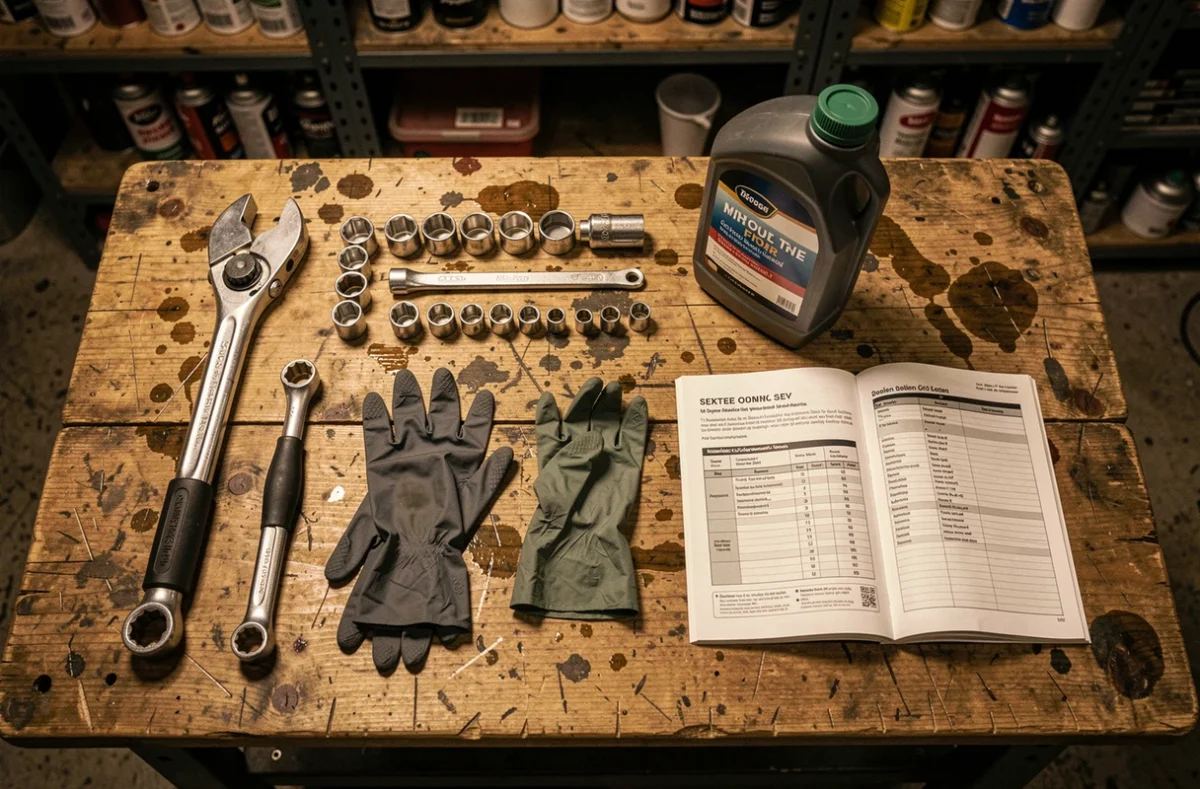
A hydraulic jack lifts the vehicle, but it does not support it. Jack stands (or safety stands) do that job. Working under a vehicle supported only by a jack is the leading cause of serious accidents in DIY automotive work.
The right jack depends on the vehicle’s ground clearance. A low-profile jack suits low-slung sedans, while a standard model is sufficient for SUVs or vans. Its load capacity should exceed the vehicle’s weight by a comfortable margin. Jack stands should be used in pairs, with each stand rated to support at least half the vehicle’s total weight.
Positioning the jack and jack stands only at the lifting points specified by the manufacturer prevents damage to the rocker panels or underbody. The vehicle owner’s manual identifies these points, which are often marked by a notch or reinforced section beneath the body.
Choosing automotive equipment depends less on how many tools you buy than on how well each tool matches the job at hand. A diagnostic scanner compatible with the exact vehicle, a torque wrench suited to the required torque range, and correctly rated jack stands cover most routine maintenance needs. Anything beyond that is best left to a professional—and recognizing this limit is part of choosing the right equipment.