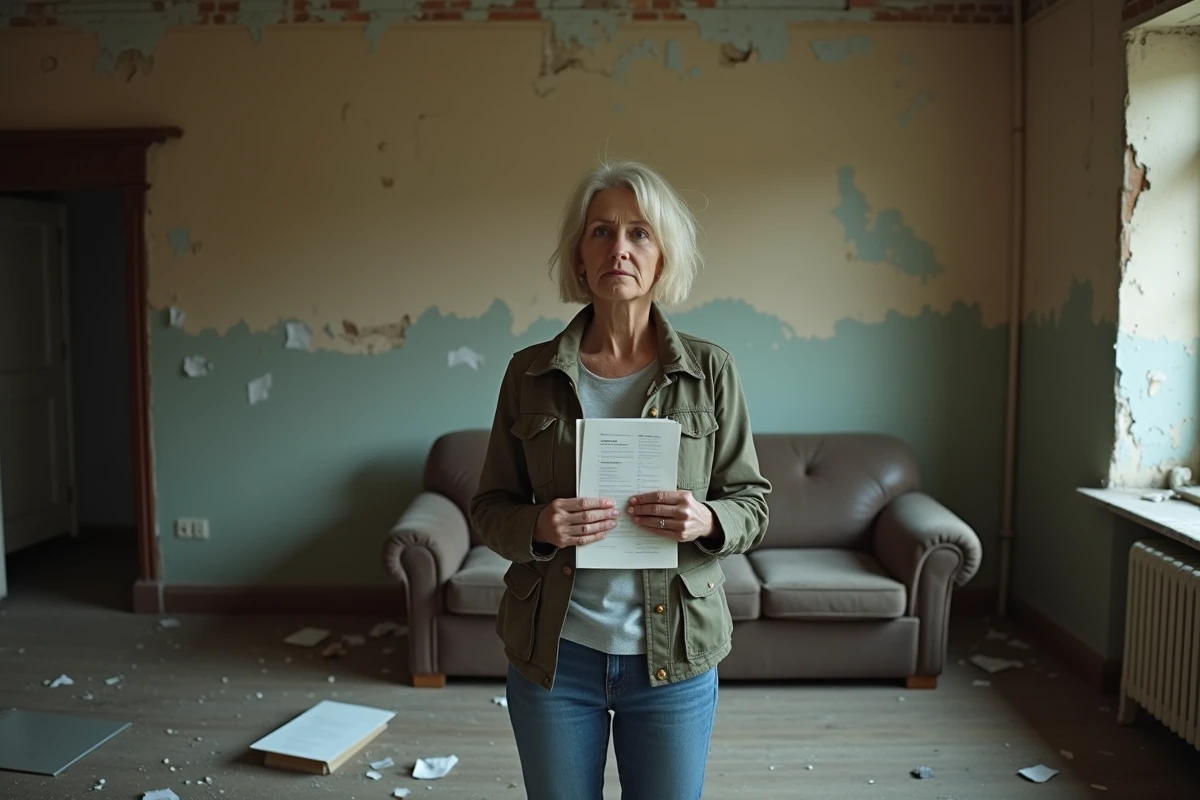
An apartment walled up for two years, with gaping windows facing the street, and yet, the property tax notice lands in the mailbox every autumn. Local taxation is not impressed by cracked walls or collapsed roofs: for taxes, the charge applies as long as no official action disrupts the situation. To those who imagine that an uninhabitable dwelling spontaneously escapes tax deductions, the administration counters with a clear principle: without evidence and without a solid file, the property tax remains due, whether the property is in a state of disrepair or not.
Uninhabitable housing: what it changes for property tax
The fact that a dwelling becomes uninhabitable does not magically interrupt the calculation of the property tax. Any building, even in ruins, remains registered with the administration as long as no action has been taken. On paper, the cadastral rental value continues to serve as the basis: it is the anchor point of the tax, adjusted each year according to the finance law. However, the owner can change everything if the uninhabitability is recognized. Only at that moment does it become possible to apply for a tax relief or exemption from property tax on all or part of the amount due.
The legislator is categorical: one cannot be satisfied with an oral declaration or a vague observation. It is necessary to gather irrefutable evidence, demonstrating that the property could not be used, rented, inhabited, or even temporarily occupied. This applies whether the dwelling is your primary residence, secondary residence, or a property previously intended for rental. It is then necessary to compile a solid file, with precise documents: expertise, official report, dated photos, or attestations from authorities, so that the vacancy is not contested at any time. The argument of mere vacancy is ineffective: only a proven uninhabitability, independent of any personal will, can make the difference.
For those wishing to initiate the process, it is crucial to know how to declare an uninhabitable house. The procedure requires constant attention: every piece of the file counts, and the slightest oversight can cost you your rights, or even lead to a negative response or a penalty. Rigor is not optional here; it conditions any possible tax reduction.
What evidence and situations allow for an exemption?
The tax administration does not settle for promises: it requires formal and detailed justifications. It is necessary to prove that the dwelling, due to a disaster, collapse, fire, or extensive work, has become completely unusable. These specific situations are those that open the way to a reduction or elimination of the charge.
In practice, it is up to the owner to prove the involuntary nature of the vacancy. It is impossible to mention the absence of a tenant for purely financial reasons: the involuntary nature of the situation must be clearly apparent. Case law is explicit on this point, and nothing can sway the administration’s position on this criterion.
The examination also focuses on the nature of the occupation before and during the concerned period. A property transformed into ruins, whether it is a primary residence, secondary residence, or rental, falls under the same requirement: not a single sign of occupation, lodging, or passage should be noted during the entire concerned fiscal period.
To ensure your file holds up, here are the documents that must absolutely be gathered:
- Expert report meticulously describing the extent of the damage or structural disorders.
- Bailiff’s report confirming the total impossibility of inhabiting the property.
- Order of peril or unsanitary conditions demonstrating an administrative prohibition of occupation.
- Invoices for heavy work to prove prolonged unusability when significant renovations are undertaken.
In addition to the strength of the documents, the vacancy must cover either the entire fiscal year or the minimum duration imposed by local regulations. An incomplete file, a vague justification, and the exemption will be nothing but a mirage.

The key steps to declare an uninhabitable property to the tax authorities
As soon as the uninhabitability situation is established, the administrative process begins. It is essential to first gather all the necessary justifications. Skipping this step or neglecting a document will almost systematically result in a refusal.
The request is submitted from the secure area of the tax website or, if necessary, by mail addressed to the competent public finance center. In both cases, it will be necessary to indicate the exact address, describe the nature of the occupation, and mention all associated dependencies (cellar, garage, etc.). Any modification, whether it involves a change of use, surface area, or destination, must be reported without delay. An oversight and the benefit of the exemption moves one step further away.
If the file arrives incomplete or past the deadline, the tax relief will be simply rejected for the targeted year. The tax administration leaves nothing to chance: each document will be checked, the reality of the facts scrutinized, with requests for additional information in case of doubt.
In the face of the tax machinery, it is better to proceed with method and caution. Those who venture in unprepared quickly hit a wall. But those who know how to align evidence and procedures see the prospect of an unexpected tax relief open up. At the end of this demanding process, it is sometimes a ruin that disappears from the tax sheet, or even an entire burden that vanishes.