A garden that functions in January as well as in July does not rely on a list of seasonal plantings. It is based on choices of structure, soil, and circulation that take into account the actual use of the land, including for occupants whose physical needs change over time.
Landscaping an outdoor space often encounters a blind spot: most guides treat the garden as a fixed decor, intended for a single user profile. However, constraints of reduced mobility, the evolution of a family over several generations, or recent regulatory obligations regarding stormwater management significantly change the situation.
Garden design and reduced mobility: rethinking circulation
Paths form the skeleton of a garden. Their layout determines access to living areas, the vegetable garden, and the terrace. When a household member uses a wheelchair, a cane, or a walker, the width and surface of these paths become technical parameters, not decorative ones.
A comfortable circulation for a person with reduced mobility requires a passage wide enough for a wheelchair, a stable surface (no loose gravel or uneven slabs), and gentle slopes. These criteria also benefit strollers, wheelbarrows, and elderly people who walk cautiously.
A common mistake is to treat accessibility as an afterthought. Integrating these constraints from the design stage avoids having to break up a wooden terrace or move a flowerbed three years later. A landscaper accustomed to working on the garden of Perspectives Jardin incorporates this type of thinking into their design plans, balancing family use and site constraints.
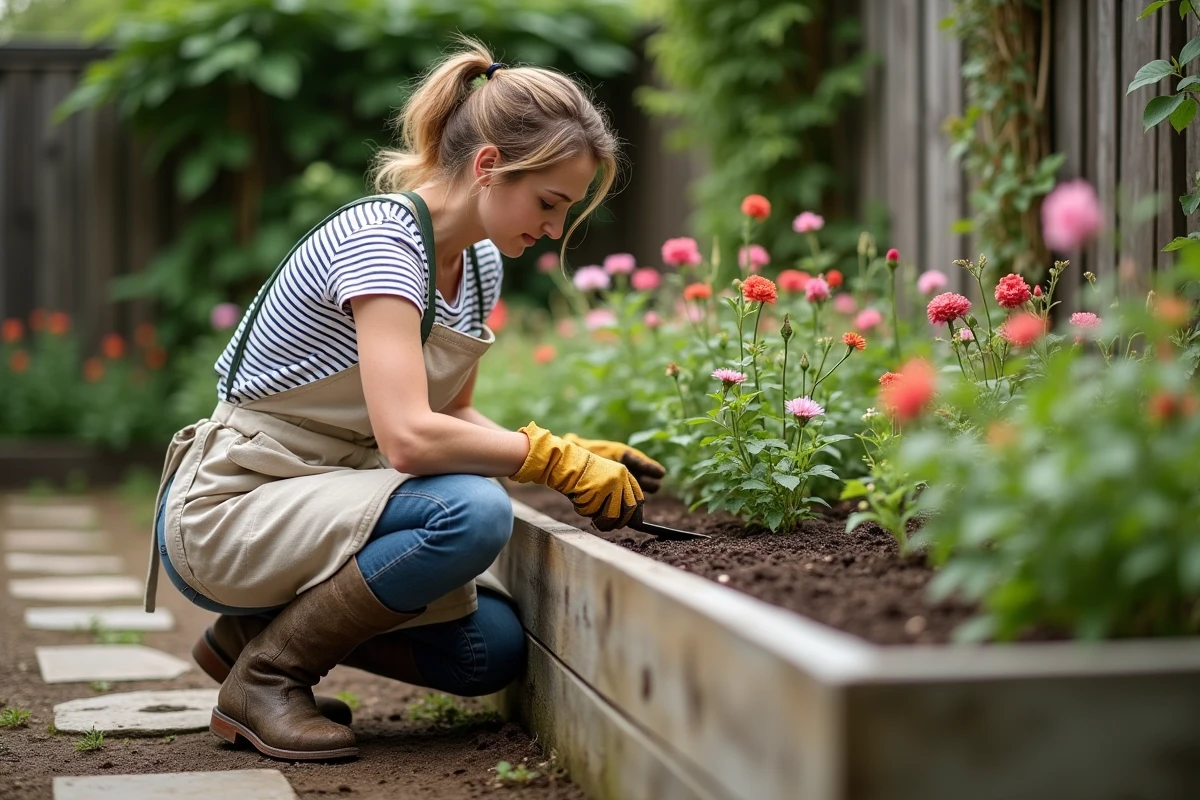
- Raised flowerbed edges (between 40 and 60 cm) allow for gardening while seated or from a chair, without bending down.
- Gentle ramps replace steps between levels of the garden, removing obstacles for all ages.
- Exposed aggregate concrete or permeable resin surfaces provide a flat and non-slip area, even in rainy weather.

Stormwater management in the garden: what regulations require
The Climate and Resilience Law has strengthened the obligations for stormwater infiltration in private gardens larger than 100 m². This regulatory constraint, often overlooked in public landscaping guides, conditions the choice of materials and the layout of spaces.
In practical terms, excessive soil sealing is now regulated. Installing a large terrace with solid slabs or paving a path along its entire length can lead to compliance issues. The ADEME practical guide on gardens and adaptation to climate change, updated in April 2026, details the subsidized assistance available for individuals wishing to comply.
Infiltration solutions are not solely technical. They influence the overall design of the garden. A vegetated swale (a vegetated depression that collects runoff water) can become a structuring element of the landscape, visually separating the relaxation area from the vegetable garden. Permeable surfaces for paths serve both circulation and water management functions.
Soil and plants: adapting plantings to drainage
A soil that retains too much water suffocates the roots of most common trees and shrubs. Conversely, overly draining soil dries out plants in summer. Knowing the texture of your soil before planting anything remains the most cost-effective action in landscaping.
A simple test (taking a handful of moist soil and squeezing it) allows you to distinguish clay, loamy, or sandy soil. This diagnosis guides the choice of plants and the watering strategy for each season.
Multigenerational garden: designing adaptable spaces
A family garden sometimes accommodates three generations at once. The needs of a five-year-old child, an active adult, and a grandparent do not overlap. Yet, most design plans treat the garden as a homogeneous space.
Planning modular areas rather than fixed spaces changes the useful lifespan of a design. A sandbox can become a raised vegetable bed as children grow. A play lawn can transform into a low flowering meadow when maintenance becomes too burdensome for the occupants.
The question of plant size takes on a practical dimension here. Fast-growing trees planted too close to the house will eventually obscure living spaces and complicate access to paths. Choosing species whose mature growth is compatible with the available space avoids costly pruning interventions.

Reduced maintenance for a viable garden all year round
A garden designed to last must be maintainable by its occupants, even as their physical capacity diminishes. Limiting the areas of short grass in favor of ground covers reduces mowing frequency without sacrificing aesthetics.
- Thick mulching (wood chips, plant debris) limits the growth of weeds and retains soil moisture in summer.
- Hardy perennials suited to the local climate require little watering and return year after year without replanting.
- Programmable drip irrigation systems reduce the time spent watering manually, a crucial point for people with limited mobility.
Four-season landscape design: structuring with evergreens
A garden that appears empty from November to March suffers from a structural deficiency, not a lack of flowers. Evergreen plants (conifers, boxwood, laurel, ornamental grasses) form the visible framework of the garden in all seasons.
Evergreens define the volumes of the garden when deciduous plants are bare. Placed in a low hedge along a path or at the back of a flowerbed, they maintain a plant presence even in mid-winter. Grasses, which dry on the stem without disappearing, add movement and texture from autumn until early spring.
The classic mistake is to compose a garden solely around spring and summer blooms. The result is spectacular for six months of the year and dismal the rest of the time. Distributing visual interests (decorative bark, berries, colorful foliage in autumn, winter silhouettes) over the twelve months requires an initial design effort but reduces frustration in the long term.
A landscaping design thought to evolve with its occupants, compliant with soil and regulatory constraints, and structured to remain readable in all seasons does not necessarily require a higher budget. It requires a longer design phase, where each choice of material, plant, and layout responds to actual use rather than decorative trends.