
Arranging the baby’s room presents a real challenge that most guides overlook: the available space is rarely what you imagine. A few square meters, an L-shaped layout, a nook under the eaves. Choosing equipment for the baby’s room is not just a checklist of furniture to buy; it primarily depends on the actual space you have and how you plan to use it in the coming months.
Small Baby Room: Balancing Between Crib, Changing Table, and Storage
When the room is less than eight square meters, each piece of furniture competes with the others. The question is not “what should I buy?” but “what fits, and in what order of priority?”.
The crib always takes center stage. A standard crib measures about 60 by 120 centimeters on the floor. Add some clearance on one side for leaning over, and you’ve already used a good third of a small room. The crib sets the constraints; everything else is organized around it.
The changing table is the first item to rethink. A changing dresser combines two functions (storage and changing), which frees up floor space compared to a standalone changing table. If the room is really tight, a removable changing pad placed on an existing dresser is sufficient and can be removed as the child grows.
For storage, prioritize height. Wall shelves above the changing area allow you to keep diapers, bodysuits, and care products within reach without taking up floor space. You will find suitable combinations for this type of configuration in the equipment offered on Niddou, which brings together solutions designed for different room sizes.
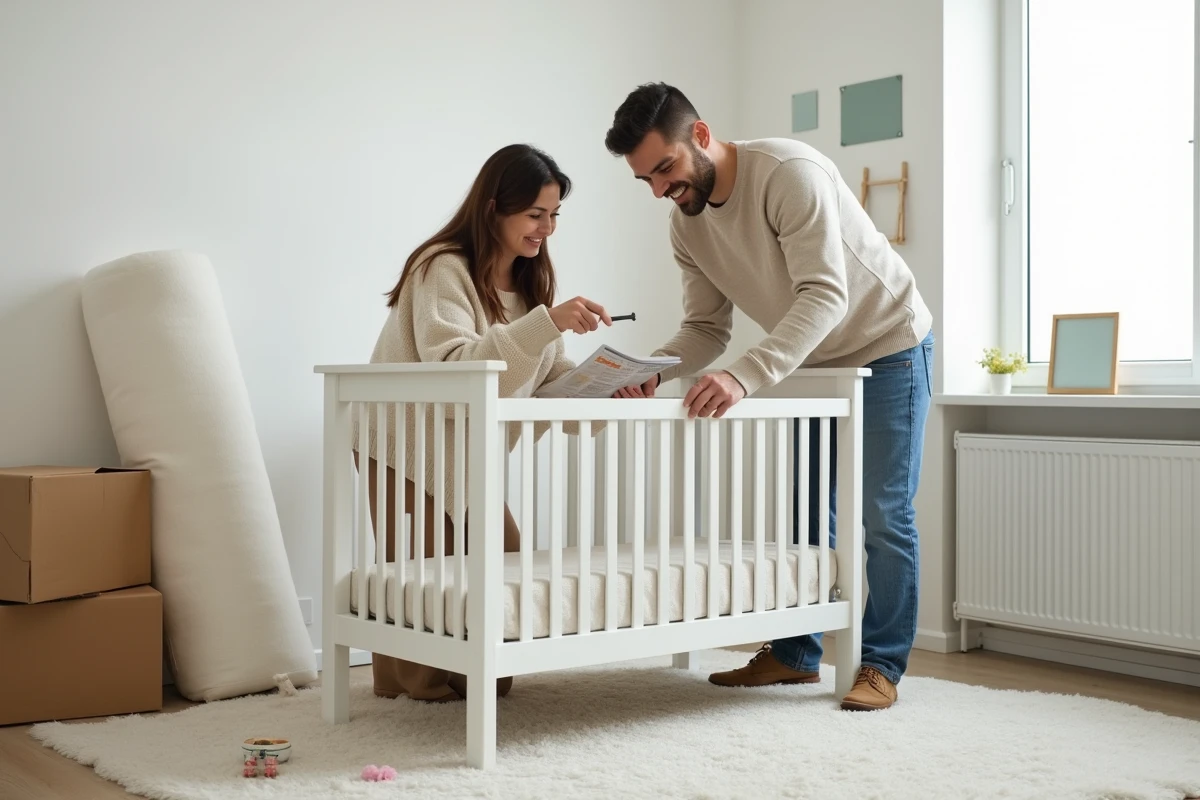
Crib and Mattress Safety: What Really Matters
Safety standards for baby room furniture go beyond simply choosing a “pretty” crib. Two points deserve special attention before any purchase.
The spacing of the crib slats must prevent the child’s head from passing through. Also, check that the mattress support is adjustable in height: high position for the first few months (your back will thank you), low position as soon as the child starts to sit up.
The mattress must fit exactly the interior dimensions of the crib. A gap of more than two fingers between the mattress and the frame creates a risk of entrapment. Prefer a firm mattress with sufficient density, without added padding or bumper. A well-fitted mattress to the crib frame is the first step in prevention.
Beyond the crib, securing furniture to the wall is often overlooked. An unsecured dresser can tip over if the child climbs on it as they grow. Recent content on child safety emphasizes this point: anti-tip straps on every tall piece of furniture, outlet covers on all accessible sockets, window locks if the room is on an upper floor.
Adaptable Equipment for Baby Room: Buy Less, Keep Longer
Have you noticed that some baby furniture is only useful for a few months? The changing table becomes unnecessary around two years, the cradle from four or five months. The adaptable approach consists of choosing from the start furniture that changes function as the child grows.
The convertible crib is the most common example. A 60×120 model that transforms into a 90×190 bed accompanies the child from birth to several years. The initial extra cost is offset by not having to buy an intermediate bed.
The changing dresser illustrates the same logic. Once the changing pad is removed, it remains a classic storage dresser for clothes or toys. Here are the concrete criteria to assess if a piece of furniture deserves the “adaptable” label:
- The crib offers at least two mattress support positions and a conversion to a junior bed without the need for additional parts.
- The dresser maintains a useful height and depth once the changing pad is removed, without disproportionate legs or a design too “babyish”.
- The nursing chair can later serve as a reading seat in the child’s room.
The goal is not to buy everything in an adaptable version but to target the two or three most cumbersome pieces and ensure they have a realistic second life.
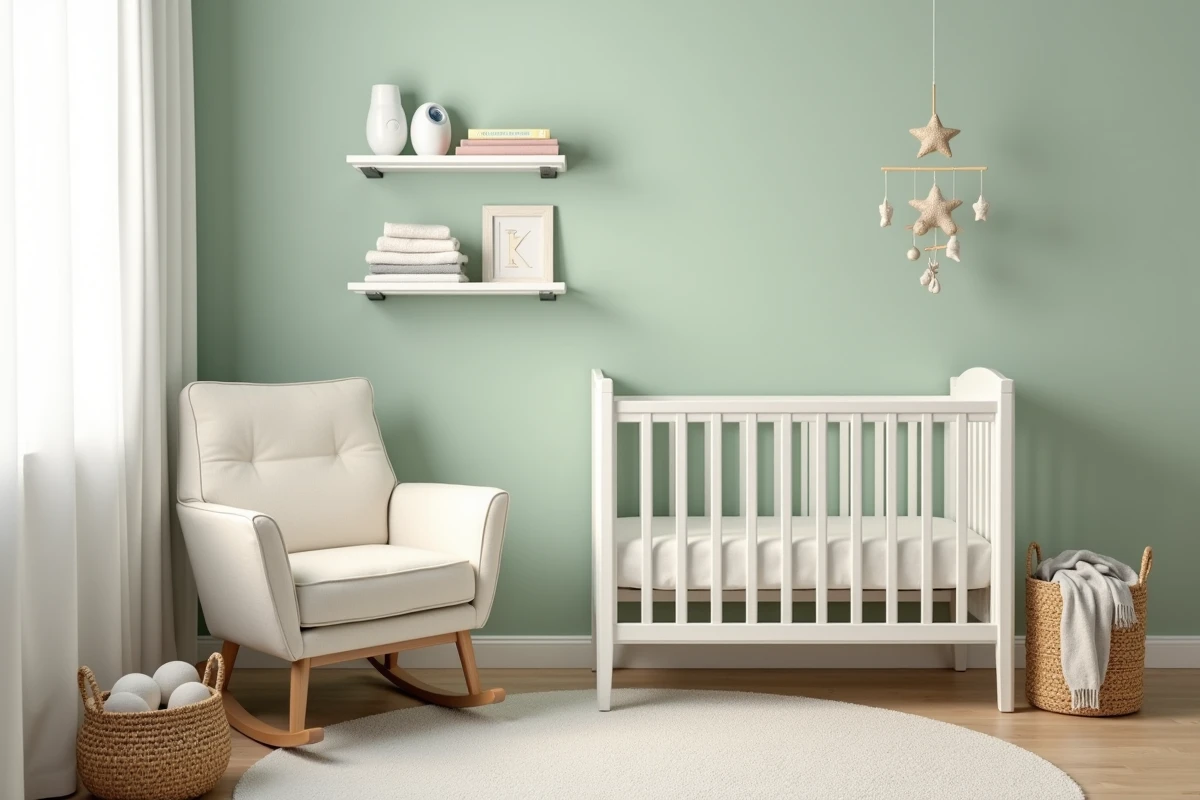
Air Quality and Nighttime Comfort: Arranging for Real Sleep
An infant spends most of their day sleeping. The room is their main living space for several months. Two aspects directly influence the quality of this sleep: air and light.
New furniture and recent paints emit volatile organic compounds. Assembling the furniture several weeks before the baby’s arrival and airing out the room daily reduces this exposure. Low-emission paints exist and are identified by labels on the cans.
For light, a dimmable nightlight is better than a standard ceiling light. Nighttime care (changing, feeding) requires sufficient light to see without fully waking the child. Soft, adjustable lighting transforms nighttime awakenings.
The placement of the crib in the room also plays a role. Avoid placing it under a window (drafts, direct light in the morning) or against a shared wall with a noisy room. In a small room, options are limited, but even a few centimeters shift can make a difference.
Organizing the Care Space for Parents
Why is this point so rarely addressed? Because most guides focus on the baby’s comfort and overlook that of the parents, who spend long minutes standing in this room every night.
The height of the changing area should match your height to avoid back pain. Measure yourself and compare with the height of the dresser before buying. A dresser that is too low can strain your back after a few weeks of daily use.
Keep care products in a single container (basket, bin) that you can move from room to room. If the baby sleeps in your room for the first few weeks, this mobile system avoids duplicating all the equipment.
- A well-stocked changing basket (diapers, ointment, spare bodysuits) near the crib reduces nighttime trips.
- A diaper bin with a tight lid, placed next to the changing area, limits back and forth.
- A low chair with armrests makes breastfeeding or bottle-feeding easier without shoulder strain.
The baby’s room does not need to be perfect on the day of birth. The first weeks reveal what is truly missing and what clutters. Keeping a margin, both in space and budget, allows you to adjust the layout to the reality of your daily life rather than an ideal image.