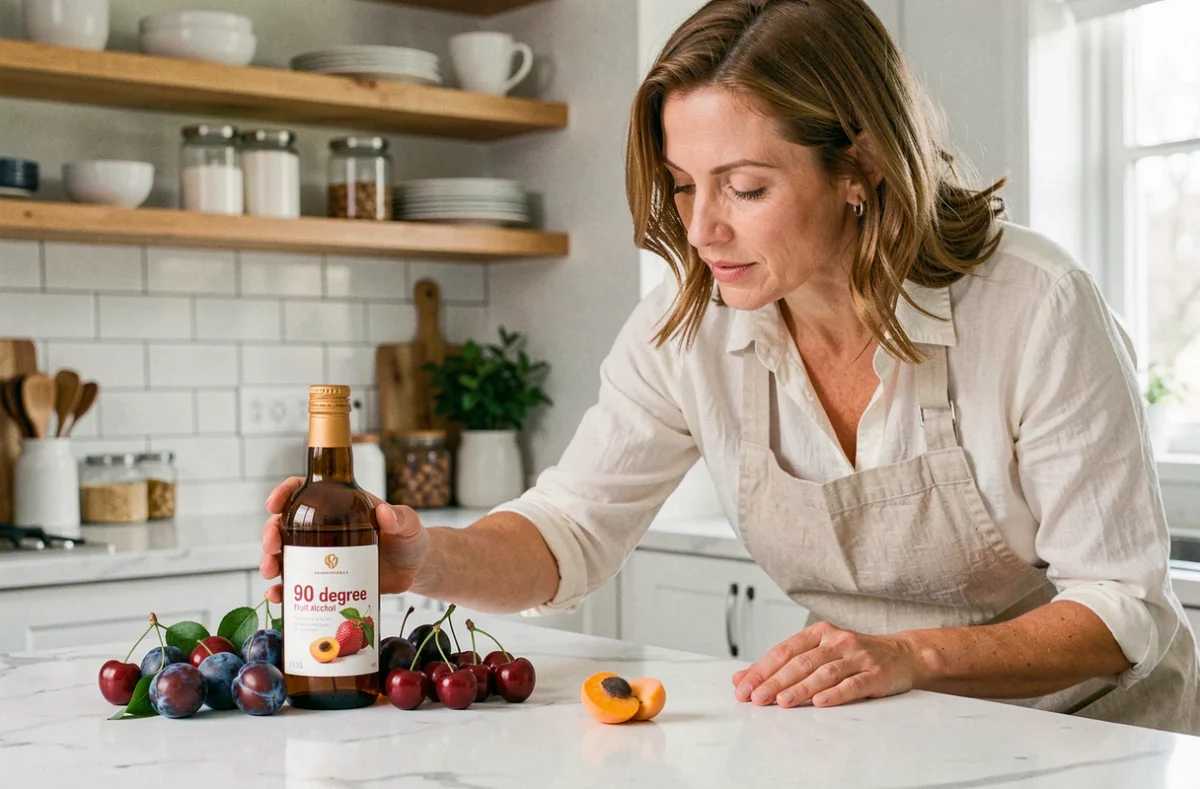
Preparing homemade fruit in alcohol requires a reliable base ingredient. Buying a bottle of 90-proof alcohol at Leclerc may seem straightforward, but the proof shown on the label alone does not guarantee that the product is suitable for food use. Alcohol sold in the household-cleaning aisle may be denatured and therefore toxic if ingested. Before filling a single jar, check the label to determine whether the product is edible or intended for household use.
Food-grade or denatured alcohol: what the store aisle doesn’t tell you
Two types of bottles labeled “90°” are sold at Leclerc and may sometimes be found in the same store. One is stocked in the household-cleaning aisle, the other in the drinks or grocery section. They may look alike, but their contents are entirely different.
The bottle sold in the household-cleaning aisle (often under the Primoplast brand) contains modified alcohol. It includes denaturing agents such as camphor, methyl ethyl ketone, and Bitrex. These substances make it unfit for consumption. Denatured alcohol must never be used in cooking, even if diluted in syrup or poured over cherries.
Alcohol intended for fruit, on the other hand, is clearly labeled “alcohol for fruit,” “food-grade alcohol,” or “spirit drink.” It is subject to regulations governing alcoholic beverages, and its sale requires an age check at the checkout. Consumer feedback on the quality of Leclerc’s 90-proof alcohol for fruit shows that checking the label should always be the first step.
Three clues can help you quickly identify the right product:
- If the label says “denatured” or “modified,” the product is for cleaning only and must never be used in cooking
- Food-grade alcohol must display an alcohol-by-volume percentage (% vol.) and a designation such as “spirit drink” or “alcohol for fruit”
- The store section is an initial clue: household-cleaning/personal care for non-food products, drinks/groceries for food-grade alcohol
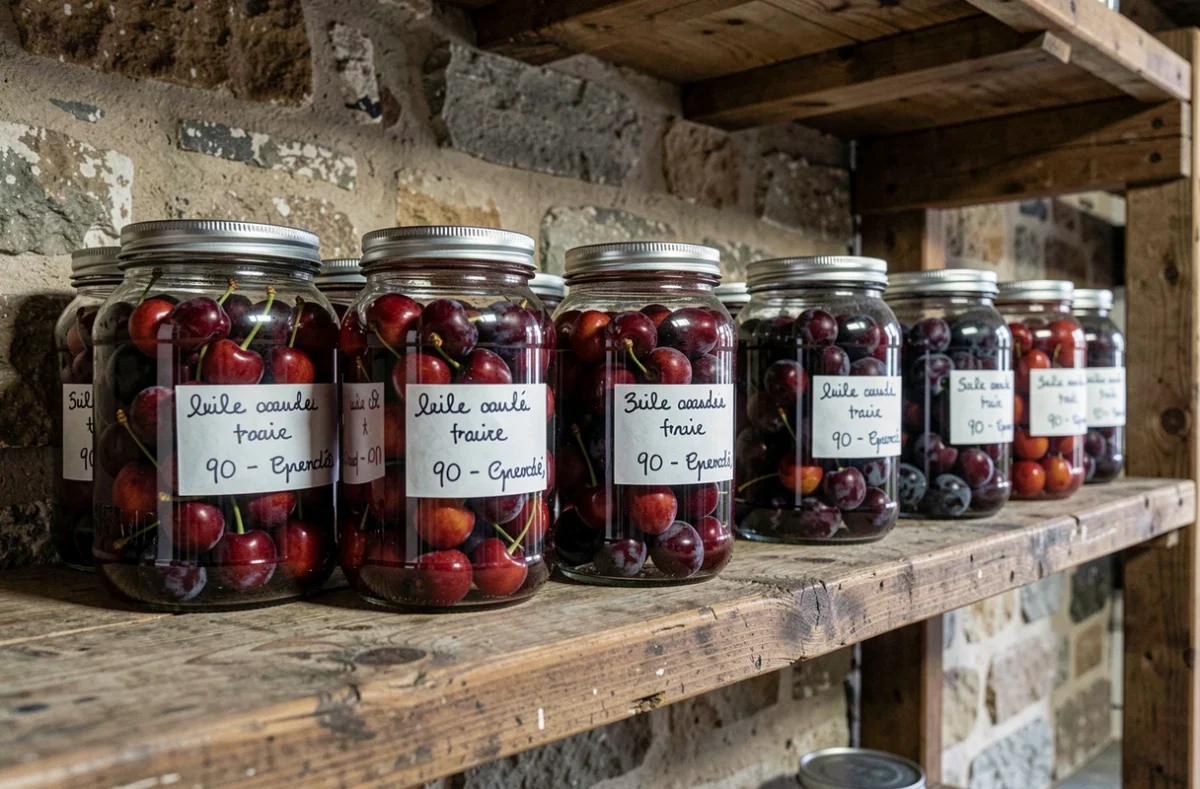
90-proof alcohol for fruit: do you really need such a high proof?
Looking for the highest proof may seem like the obvious way to preserve fruit for a long time. In practice, 90-proof alcohol isn’t necessary in every case.
Why? Because the fruit and sugar release water into the jar, gradually diluting the alcohol. The final proof of the mixture drops well below 90°, sometimes by half, depending on the amount of fruit and syrup. Recent culinary sources instead recommend alcohol for fruit at around 40 to 45% ABV, which is easier to measure and already formulated for maceration.
Using 90-proof alcohol carries two risks. Too little sugar makes the result overly harsh. Too much alcohol, on the other hand, overwhelms the fruit’s aromas instead of bringing them out.
How maceration transforms the result
Alcohol does more than preserve. It extracts aromas, pigments, and certain compounds from the fruit, while the fruit releases juice and sugar into the liquid. The result is an alcoholic preparation in its own right, recognized as a production method under European regulations on spirit drinks.
A jar made with household alcohol falls outside this regulatory framework. The resulting mixture may be dangerous, regardless of how long it is left to macerate.
Availability of alcohol for fruit at Leclerc stores
Some Leclerc stores stock alcohol for fruit, especially in summer and fall, when cherries, plums, and mirabelle plums are in season.
No source confirms that it is consistently available nationwide. Stock depends on the store and the season. Checking the online catalog for your nearest Leclerc before making the trip is the most reliable approach.
Empty shelf? Alternatives are available at specialty food shops or wine merchants. Alcohol for fruit from specialist brands is also available online, provided the seller is licensed to sell alcoholic beverages.
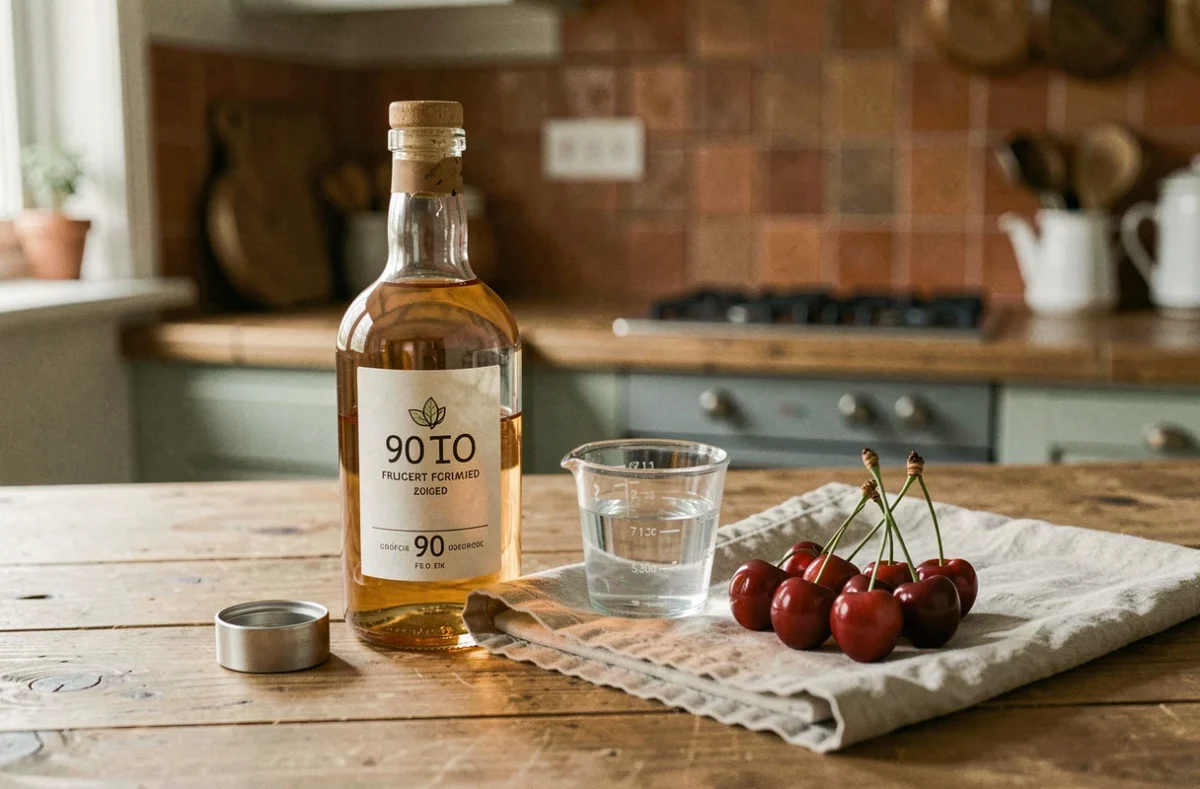
Making fruit in alcohol successfully: practical precautions
Once you’ve found the right alcohol, a few simple rules can help prevent disappointment and health risks.
- Keep the fruit completely submerged in the liquid. Any pieces exposed to air are more likely to oxidize and develop mold
- Check the jar during the first few days: persistent bubbles or a sour smell indicate uncontrolled fermentation, and the jar should be discarded
- Store it away from light and heat, in a dry place, to preserve the aromas extracted during maceration
- Keep the preparation for adults only: a jar of fruit in alcohol is still an alcoholic preparation, even after several months
The choice of fruit matters. Cherries, plums, mirabelle plums, and pears hold up well to long maceration. Very watery fruit such as strawberries or raspberries needs more sugar to achieve a balanced result.
Sugar and proportions
Sugar acts both as a preservative and as a flavor enhancer. Too little sugar makes the result harsh; too much masks the fruit. Most traditional recipes call for a weight of sugar equal to half the weight of the fruit. Adjust this ratio according to the natural acidity of the fruit you choose.
Leclerc’s 90-proof alcohol for fruit can produce excellent results, as long as you don’t confuse the bottle from the household-cleaning aisle with the one in the food section. Read the label, check for “food-grade alcohol” or “alcohol for fruit,” and choose a proof suited to the type of maceration you have in mind. These three steps are all it takes to prepare it safely and make jars worthy of traditional artisanal know-how.