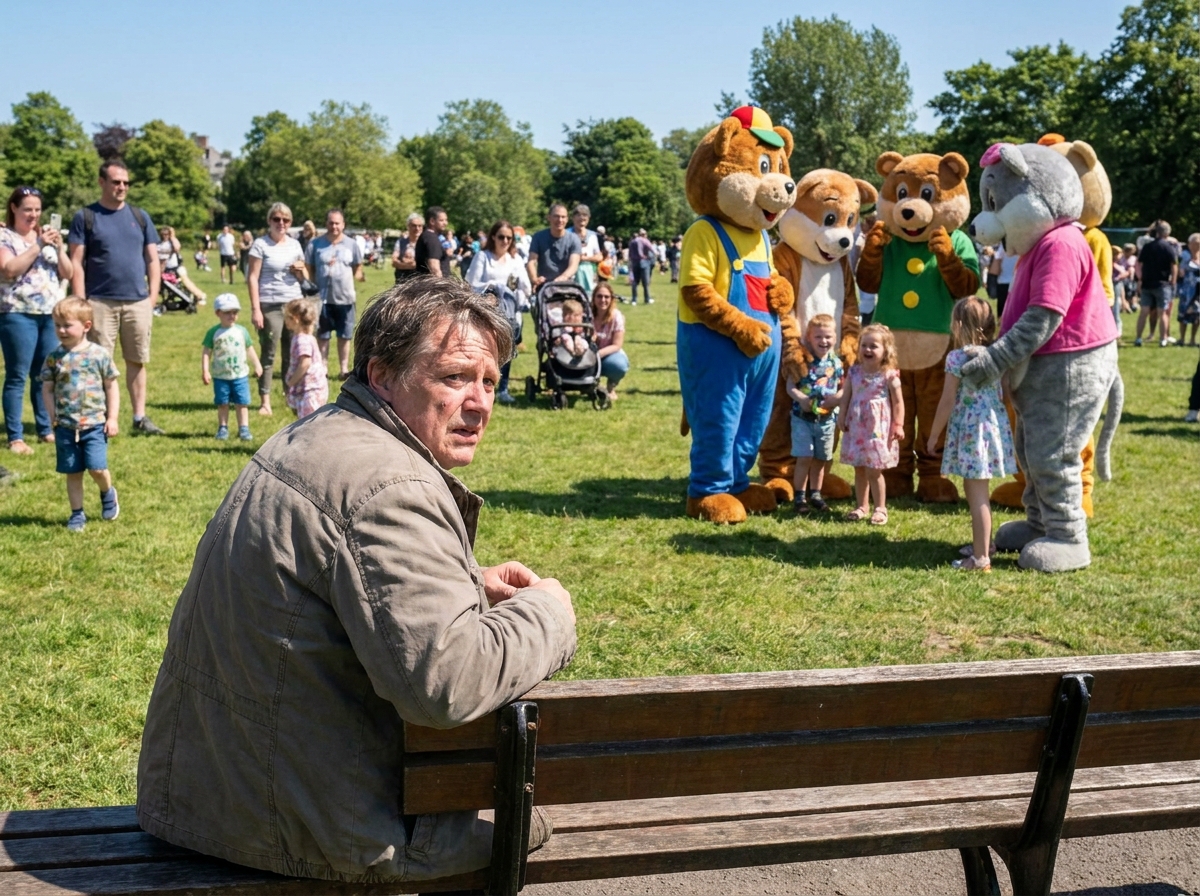
A child screaming at the sight of a mascot in a shopping mall, an adult changing sidewalks to avoid a costumed character in front of a store: the fear of mascots is not limited to a momentary surprise reaction. This phobia, sometimes called maskaphobia, triggers real distress that can alter lifestyle habits, lead to the avoidance of certain places, and generate anxiety long before encountering the dreaded character.
Maskaphobia in Adults: When Avoidance Shapes Daily Life
Most articles on the subject focus on children. The affected adults remain in the blind spot. They are neither immature nor simply shy: their phobia persists and manifests in very concrete contexts.
Sports events, commercial animations, amusement parks, corporate parties, family outings: opportunities to encounter a mascot are frequent. Anticipatory anxiety often begins days before the event, long before any real confrontation. The person checks the schedule, seeks to know if costumed characters will be present, and prepares an avoidance route.
This anticipatory behavior brings maskaphobia closer to a structured anxiety disorder rather than a simple momentary fear. The social impact is real: refusing a family outing, leaving a public place in a hurry, feeling shame in the face of the surrounding incomprehension. To learn everything about the fear of mascots, one must first acknowledge that it affects all ages with the same intensity.
Fear of Masks and Frozen Faces: What Triggers the Phobia
Have you ever noticed the discomfort caused by a face that smiles without ever changing expression? This is a useful starting point for understanding this mechanism.
A frozen face prevents the reading of emotions. The brain no longer receives the usual cues (gaze, micro-expressions, lip movement) that allow it to assess a person’s intentions. This inability to decode the other triggers an alert signal.
In children aged 3 to 5, this reaction is amplified by the difficulty in distinguishing reality from imagination. A mask covering a familiar face becomes a source of profound confusion. The child no longer recognizes the person underneath, and the character takes on an unpredictable existence of its own.
Size, Movements, and Sound: Amplifiers of Fear
The mascot combines several anxiety-inducing characteristics beyond the frozen face:
- An oversized stature compared to the child (or even the adult), which activates a vulnerability reflex in the face of a being perceived as dominant
- Exaggerated and jerky movements, difficult to anticipate, that break with usual human gestures
- A muffled or absent voice, which eliminates a reassuring communication channel and reinforces the impression of dealing with a non-human being
It is the combination of these elements that transforms discomfort into phobia, not a single isolated factor. A costume without a facial mask rarely provokes the same intensity of fear.
Preparing for a Gradual Exposure to Mascots
The most documented approach for specific phobias is based on gradual exposure. The principle is simple: gradually get closer to the object of fear, at one’s own pace, without forcing confrontation.
For the fear of mascots, this approach requires concrete preparation that few guides detail.
Step 1: Name the Fear Without Trying to Suppress It
Before any exposure, the person (child or adult) needs to put words to what they feel. Naming the fear reduces its emotional grip. With a child, one can use a drawing: ask them to draw the mascot that scares them, then to draw what they feel in their body (tight stomach, racing heart).
For adults, a self-observation notebook works well. Note the feared situation, the intensity of anxiety on a personal scale, and the automatic thoughts that arise (“it will touch me,” “I can’t escape”).
Step 2: Build a Realistic Exposure Ladder
A common mistake is to skip steps. Taking a terrified child directly to see a mascot “to get them used to it” produces the opposite effect: the fear intensifies. Exposure should start with distant supports.
Here is a concrete progression, adaptable according to age:
- Look at photos of mascots, first small, then large, choosing when to stop
- Watch short videos showing mascots in action, with the option to pause
- Observe a mascot from afar in a public place, at a distance chosen by the person themselves
- Gradually get closer during successive visits, without the obligation of direct interaction
- See the costume removed by the person wearing it, to restore the link between the character and the human
This last step is particularly effective for children. Seeing someone put on and take off the costume in front of them breaks the illusion of an autonomous being.
Step 3: Respect the Pace Without Setting a Deadline
Each step should be repeated until anxiety naturally decreases. Forcing the transition to the next step when distress remains high undermines all previous work. With a child, valuing each small progress matters more than reaching a final goal.
When to Consult a Professional for Mascot Phobia
The line between a normal developmental fear and a phobia that requires professional support lies in two criteria: persistence and functional impact.
In children, a fear of mascots between ages 2 and 5 is part of classic emotional development. If it gradually diminishes with age and positive experiences, no specific intervention is required.
On the other hand, a fear that intensifies beyond ages 6-7 or that causes massive avoidance justifies a consultation. In adults, the warning sign is avoidance that alters social habits: systematically refusing outings, anxiously anticipating trivial events, feeling disproportionate distress.
A psychologist trained in cognitive-behavioral therapies can structure an appropriate exposure program and work on the automatic thoughts that fuel the anxious cycle. The phobia of mascots responds well to this type of care, precisely because the object of fear is identifiable and the exposure situations are easy to organize progressively.